
Tunis 2026
(Click any image to see it full size.)
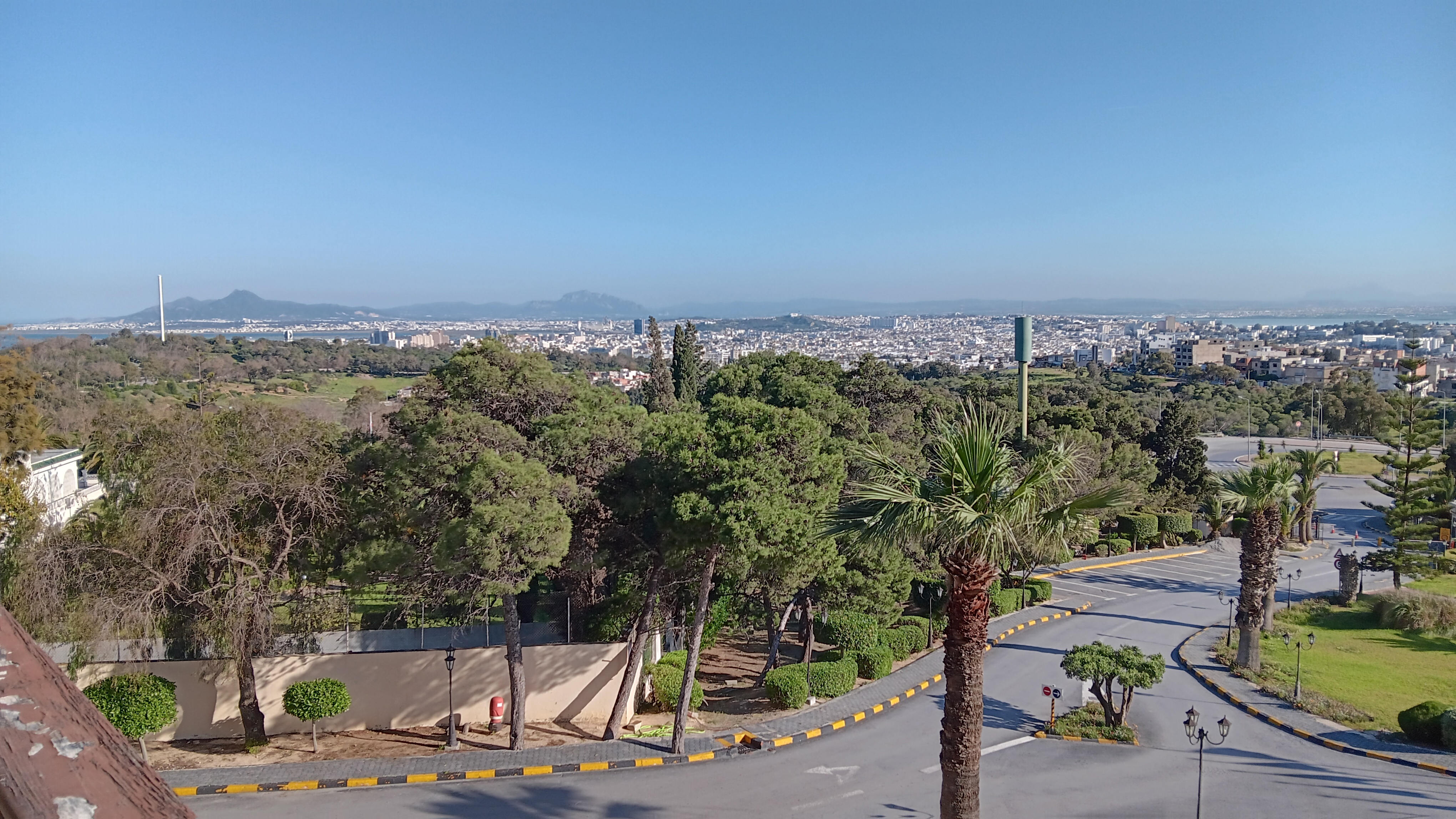
Tunis is the capital and major city of Tunisia, on the southern rim of the Mediterranean, directly below France. So it is no surprise French is spoken everywhere, and the French have their second home/condos on the Mediterranean shore. The main supermarkets are French: mainly Monoprix and Carrefour. I have to say I have never seen crummier Monoprixs anywhere in the world, except of course the superstores in the French expat area, which are up to the moment modern.
Tunis spreads way out. The transit system looks like a giant spider, bringing people in from all the little villages of the country, all interesecting at the center of town. Unfortunately our hotel, a gracious, sprawling affair for decades, is built on a hillside across from the Foreign Affairs Ministry, in the diplomatic neighborhood, so no transit even comes close to this retreat. Downtown is where the Medina is located, and is suitably commercial. But office towers are MIA. Tunis is not a bustling world player, which is fine with us.
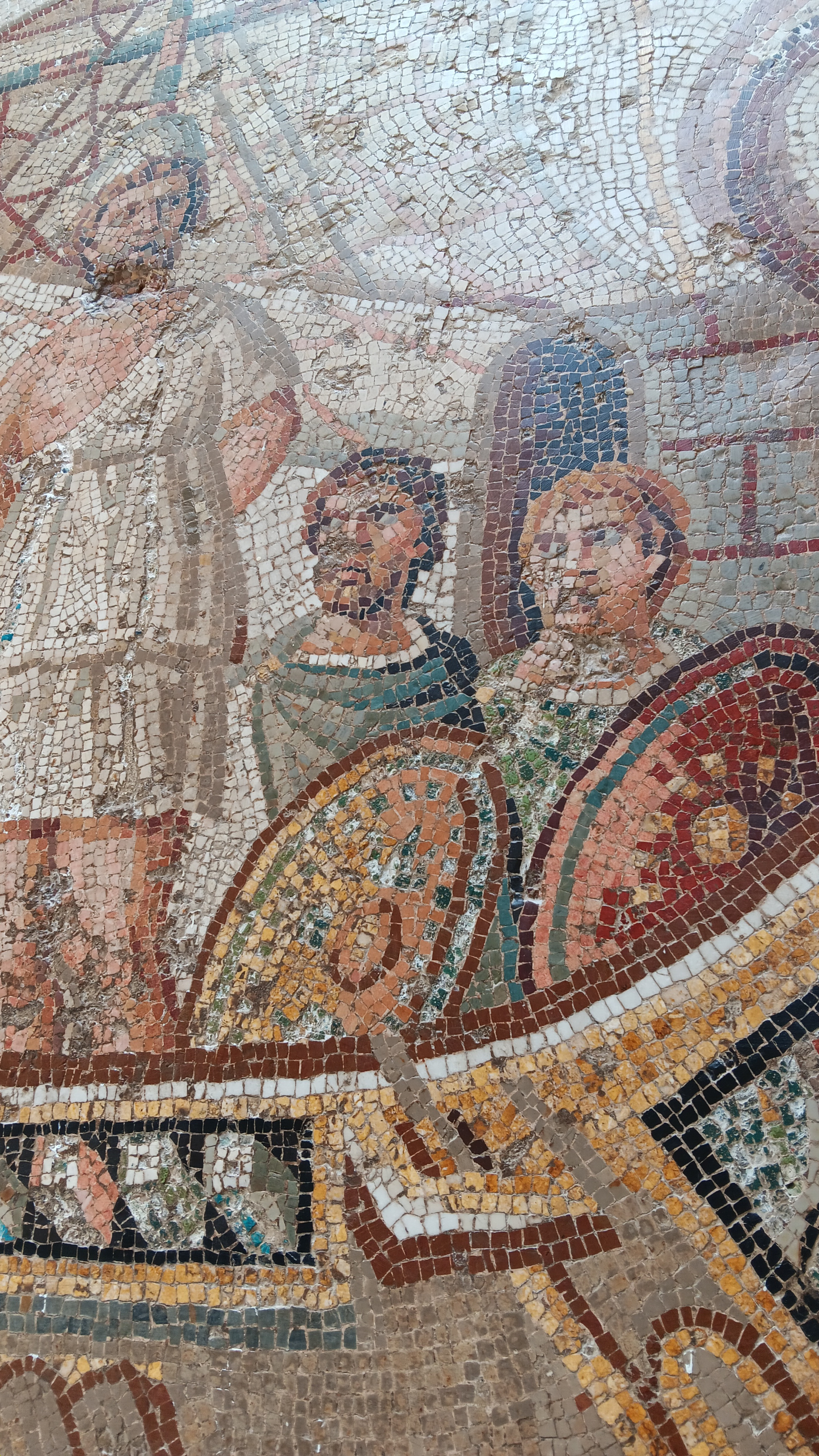
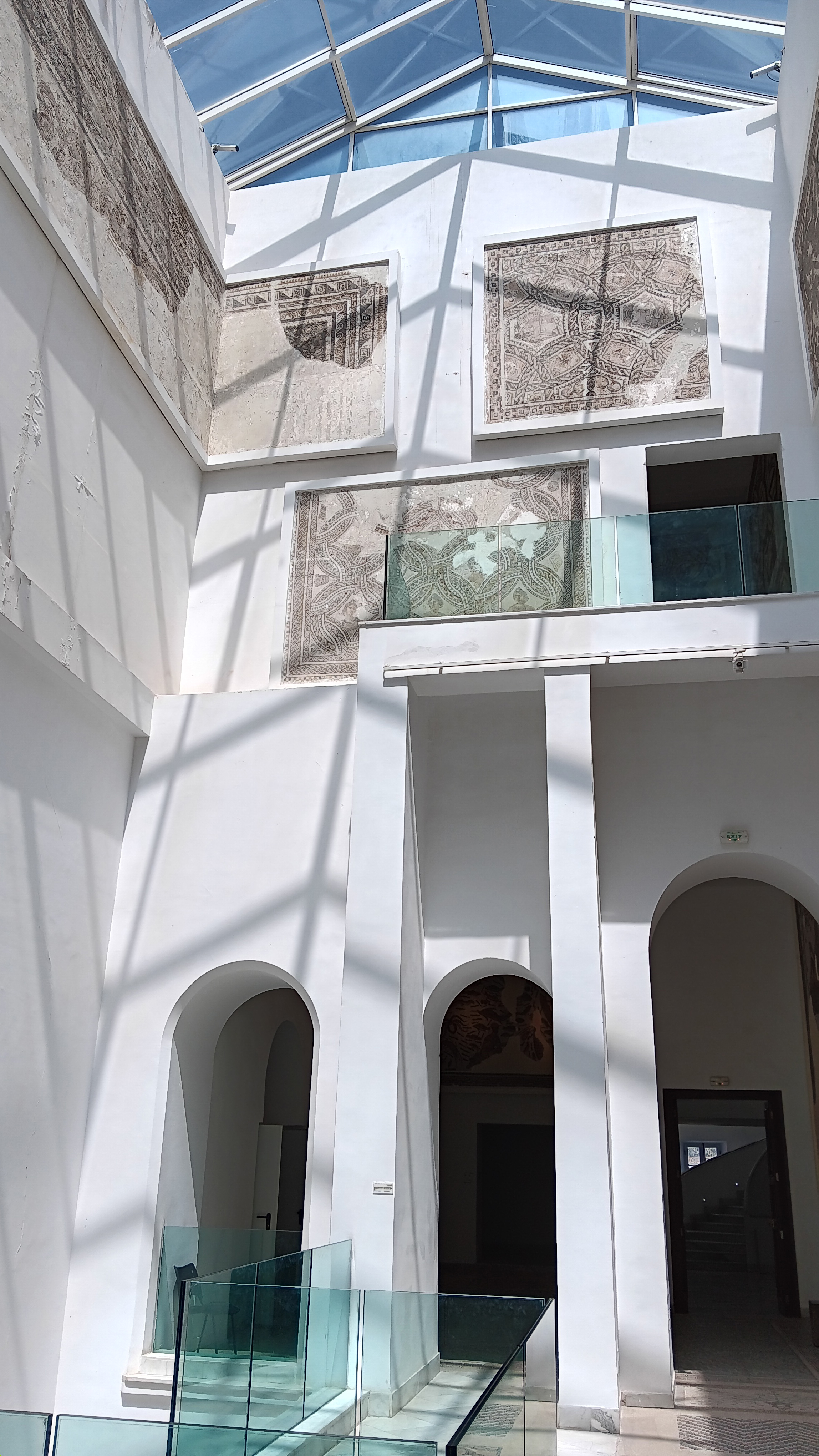
Aside from the beaches, the reason to come to Tunis is for the ruins. This is the location of Carthage, archenemy of Rome. There are all kinds of ruins, from a seaside bathing/spa world, to hillside residential neighborhoods, to a large outdoor ampitheater. Sadly, or maybe thankfully, all of the walls, floors and ceilings have sbeen stripped out of them and installed in the Bardo Museum. The Bardo is easily the cutural highlight of the city, an ultramodern building that makes the best use of natural sunlight we have ever seen in the world. There you can walk on the same floors as the Carthaginians, marvel at the same wall murals, and gaze at the intricate ceilings.
 |
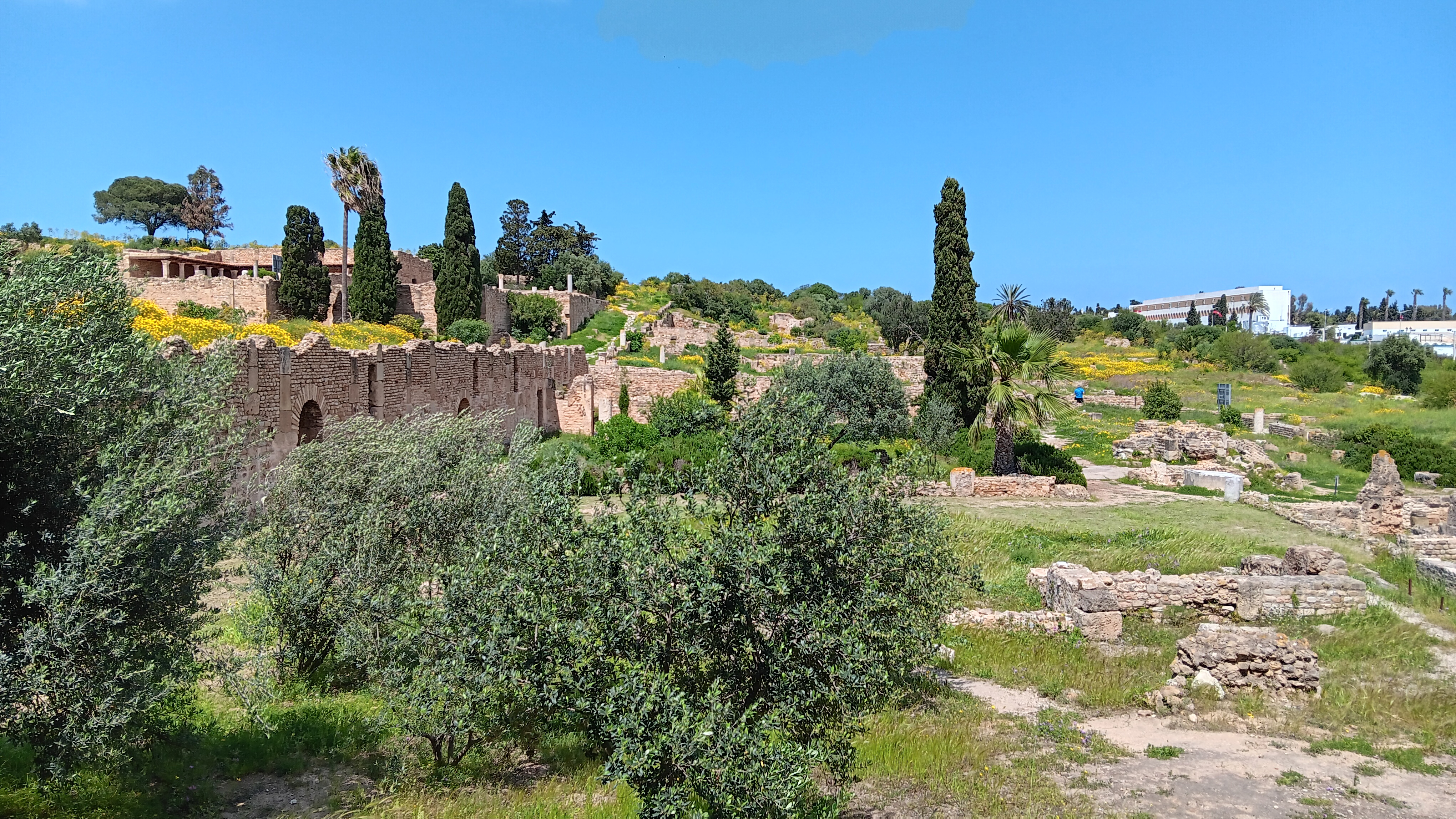 |
| Tunis from our balcony | Hillside villas of Carthage |
Because of our location so far from downtown, we had to take cabs everywhere. Tunis is not really a good place to rent a car, as any drive to anywhere will attest. Drivers are aggressive, and cars are damaged, especially the taxis. We didn't even want to think about parking. And anyway, cabs are much cheaper than car rentals, so it was not difficult to get anywhere we needed. But by the second day, our Sheraton Hotel recommended a taxi and driver for us. We generally prefer to stumble around ourselves, but geography won out. Within ten minutes, Hasan showed up in his battered Yellow Cab, complete with broken windshield, dented fenders, and no meter. He gave us a terrific price for the day, and off we went, to ruins, shopping and lunch. Hasan has been a cab driver for 40 years, knows everyone, and everyone knows him. He speaks Arabic, French and English and can barely eke out a living because cab rides are so inexpensive. It quickly became clear there is no way he could afford to replace the windshield on what we were paying him for a whole day of driving and waiting around for us. He talked us into using him again all day our third day, and also taking us to the airport when we left. We ended up giving him all the Tunisian dinars we had left, because he deserved them, and it is oddly illegal to take any dinars out of the country with you when you leave. Hasan was fun. Hasan was a character. He made a big difference in our trip.
 |
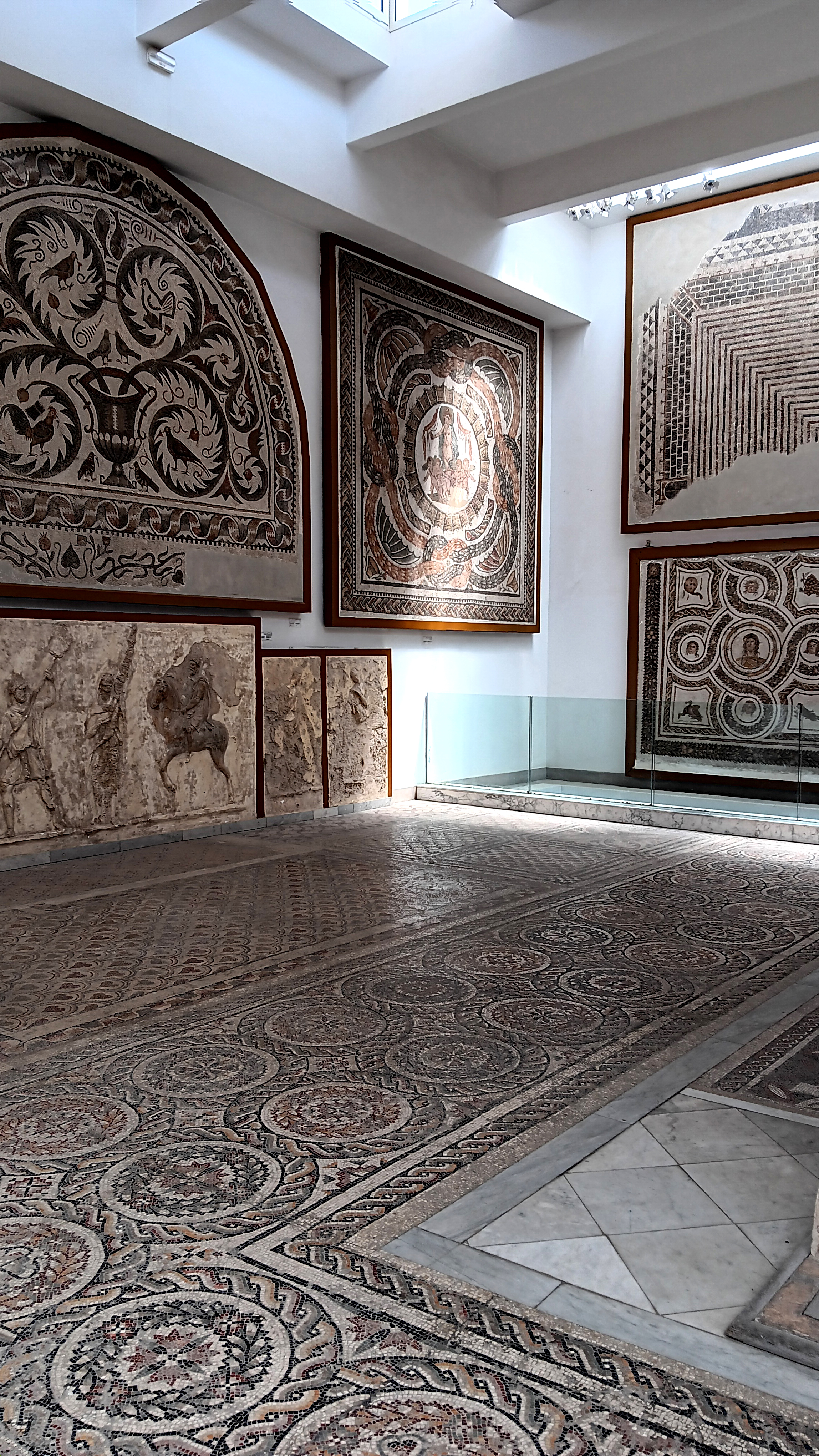 |
| Sunlit Bardo Museum interior | Carthaginian tiled wall murals, floors |
The food was great, but we had to know what we were looking for. I had several places I had researched ahead of time, but Hasan did not know them, and I had to guide him. One of them he could not find at all. Still, we ate dishes we never imagined, and it was great. I even snagged a brik, the most famous street food of the country, on our way out of the Medina.The brik they serve in restaurants in New York are absolutely nothing like the originals in Tunis, so it wa a discovery. One of the stranger things, which we would later experience in Istanbul as well, was that grilled fish were always served with a cup of boiled rice and a pile or basket of french fries. Usually there was a small pile of lettuce to give it all some color. Odd to us, but that's how they do it in Tunisia.
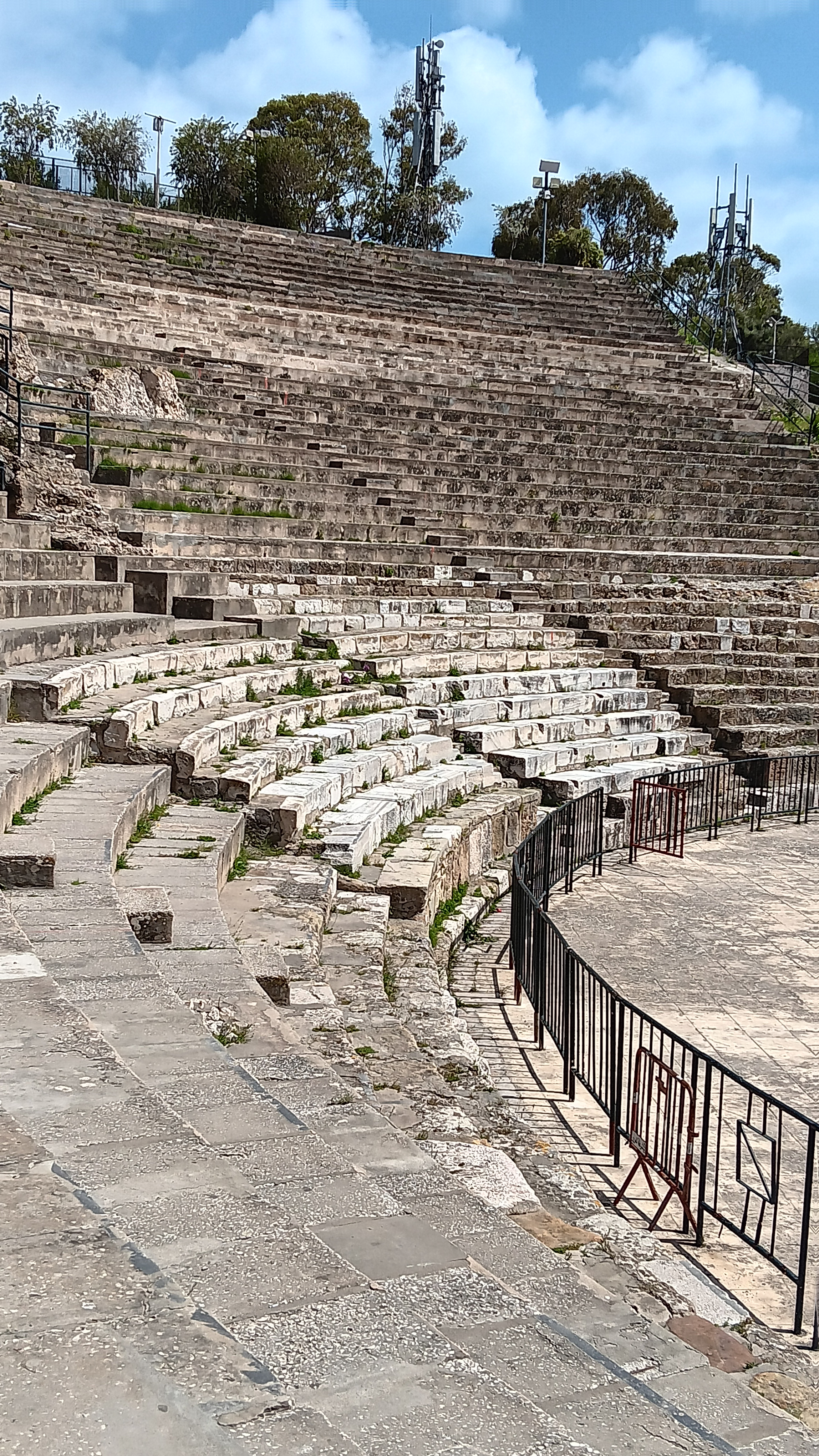 |
Roman theatre, 200 AD| complete with cell towers (upper right) |
|